Skip to content

Antimony Day 2026

Strategic Control?
The International Antimony Association Conference
24–25 November 2026  | Renaissance Hotel, Brussels


The global antimony market is undergoing a profound transformation. Once considered a niche commodity, antimony has become a crucial raw material at the centre of geopolitical competition, industrial policy and global supply chain shifts.

Antimony Day 2026 – Strategic Control? will bring together policymakers, i2A and CRMA membership, industry leaders, investors, researchers and stakeholders from across the critical raw materials value chain to explore how these developments are reshaping global markets, and what they mean for Europe’s competitiveness and industrial resilience.

The conference will examine the growing influence of geopolitics, trade policies, investment decisions and strategic dependencies on the availability, pricing and future of antimony. Discussions will also address the broader challenges facing Europe’s critical raw materials strategy and the actions needed to strengthen resilient and competitive supply chains.

Whether you are involved in mining, refining, manufacturing, policymaking, research or investment, Antimony Day 2026 offers a unique opportunity to network,  gain valuable market insights, engage with leading international experts and help shape the future of one of the world’s most strategic critical raw materials within the broader landscape of critical raw materials essential to global industrial and energy transitions.”

Logo day 1

AGENDA

DAY 1 – 24 November 
(In cooperation with the Critical Raw Materials Alliance)

12:00
Registration and light lunch
12:45
Introduction to the day and to the conference

Raymond Devaux, President, I2A
Mike Blakeney, President, CRM Alliance
David Rose, Moderator

13:05
Session 1: Effectiveness of EU Policy Instruments to Secure Sustainable and Resilient Supply of CRMs: From Ambition to Implementation

Over the past years, the EU has put in place an ambitious framework to reduce strategic dependencies on critical raw materials, most notably through the Critical Raw Materials Act (CRMA), the Batteries Regulation, and related industrial and trade instruments. While these initiatives clearly demonstrate political ambition, questions remain regarding their practical effectiveness, internal coherence, and impact on real projects on the ground.

This session aims to critically examine whether current EU policy instruments are delivering on their objectives, and what adjustments may be required to bridge the gap between ambition and implementation.

Lieven Top – Senior Advisor Raw Materials, Trade & Industry bij Flemish ministry of Economy, Sciences and Innovation, Deputy high-level representative on the Board of the Critical Raw Materials Act.
Tomas Wyns – Doctoral Researcher in the Environment and Sustainable Development cluster, Vrije Universiteit Brussel
Keit Pentus-Rosimannus – European Court of Auditors
Ben Van de Voorde – Director Government Affairs, Umicore
Romain Charvet – Public Affairs Manager, France & Europe, ERAMET

14:30
Coffee Break
15:00
Session 2: Critical Raw Materials as a Geopolitical Weapon: Strategic Competition, Dependencies and Industrial Consequences

Critical raw materials have become a central element of geopolitical strategy, increasingly used as tools of influence, leverage, or pressure. Export controls, trade restrictions, and state backed industrial strategies are reshaping global value chains for CRMs, with direct implications for Europe’s industrial base.

This session aims to decipher how major global actors approach CRMs strategically, and what this means for European industry and policy choices.

Zora Mincheva, Policy Officer, DG TRADE, European Commission
Jeff Frankston, Acting Deputy Assistant Secretary of War, Industrial Base Resilience (IBR), Ministry of War USA
Camille Boullenois, Associate Director, Rhodium Group’s China Projects team
Gabriel Ratiu, Supply Officer, NATO
Marco Levi, CEO, Ferroglobe

16:15
Session 3: Looking Downstream: Why Processing and Refining are the Real Bottlenecks in Europe’s CRM Strategy

Securing access to raw materials is only part of the challenge. Europe’s greatest strategic dependency often lies further downstream, in the processing and refining stages that transform raw materials into the inputs needed for batteries, wind energy, advanced manufacturing and other strategic industries. Despite growing demand, Europe continues to face significant challenges in maintaining and expanding its processing capacity, including high energy costs, global competitive pressures and difficult investment conditions. This session will explore how Europe can strengthen its midstream industries, reduce strategic dependencies and create the business case for investing in processing and refining within Europe.s.

Nils Backeberg, Founder & Director, Project Blue
Pierre Tardieu, Chief Policy Officer, Wind Europe
Kinga Timaru-Kast, Director of Public Affairs & Communications, RECHARGE
Mike Blakeney, Head of Government and Public Affairs, Cobalt Institute
17:00
Closing remarks
19:00
Social Event

DAY 2 – 25 November 
(08:30 until 18:00)

08:30
Registration and welcome coffee
09:00
Welcome, Introduction and Setting the Scene – a Market Reality

The i2a President will open Day 2 with a brief reflection on the key takeaways from Day 1 and a preview of the discussions ahead, highlighting the importance and urgency of the debate. The session will then set the scene with an antimony market review, looking at supply and demand, market trends and developments, key challenges, and the outlook ahead. The introductory session will conclude with a Q&A.

Raymond Devaux, President, International Antimony Association
Nils Backeberg, Founder & Director, Project Blue

09:30
Session 1: Antimony as a Strategic Commodity: Power, Control and Industrial Consequences

Antimony has moved well beyond its traditional role as a specialty material. Control over supply, processing and trade is increasingly concentrated, with direct implications for industrial players that depend on it. This session will look at how market structure and strategic positioning are shaping access to material and influencing pricing dynamics. Particular attention will be given to military and fire-retardant applications.

Maciej Szymanski, Team Leader, DG DEFIS
Sander Kroon, Industrial Products | Director Advocacy Europe, ICL
Gauthier Parthon de Von, Economics, Legal & Trade Manager, Aerospace, Security & Defence Industries Association of Europe
Marc Thys, Senior Adviser at Growth Inc

10:30
Coffee Break
11:00
Session 2: The US–China Factor: How Strategic Rivalry Is Reshaping Antimony Markets

Understanding developments in the antimony market requires a broader geopolitical perspective, particularly the US–China relationship and the role of other key regions, including APAC. Measures such as export controls, stockpiling and targeted industrial policies are already affecting trade patterns and availability. The discussion will focus on how these dynamics are likely to evolve and what they mean for European stakeholders.

Altynay Junusova, Technology Analyst, Merics
Ryan Caldwell, De Stijl Consulting
Pawel Swieboda, Senior Visiting Fellow, European Policy Center

12:00
Session 3: Supply, Demand and Volatility: Strengthening Strategic Resilience Through Feedstock Access

The antimony market remains tight, with limited supply options and demand evolving across several key sectors. At the same time, volatility has increased, partly as a result of geopolitical developments. This session will take a closer look at current market trends and what they imply for companies operating along the value chain.

Sonia Bahroun, Geoscientist, BGR
Frank Linkert, Product Manager, S. Goldmann GmbH & Co. KG
Nick Jovanovski, Managing Director, Pela Global
12:45
Lunch and Networking
14:30
Session 4: Europe’s Position in the Antimony Market: Structural Constraints and Investment Reality

Europe remains highly dependent on imported antimony and has limited influence over global pricing, reflecting both upstream dependency and a weaker position in key segments of the value chain. At the same time, efforts to strengthen resilience are constrained by persistent investment challenges, including market uncertainty, cost competitiveness and regulatory complexity.

This session will examine how these structural weaknesses and financing barriers interact in practice, and what realistic options exist to improve Europe’s position. Particular attention will be given to the conditions needed to unlock investment across the value chain and support the development of more secure and competitive supply chains.

Geert Muylle, Ambassador-Special Envoy for Energy Security and Critical Raw Materials, Belgian Federal Public Service Foreign Affairs
Eirini Konstantinou Principal Banker, Natural Resources, European Bank for Reconstruction and Development (EBRD)
Wim de Vos, CEO, Campine NV
Thomas Hüser, Chairman of the Board and Director, Military Metals Corp

15:30
Coffee Break

16:00
Session 5: From Dependency to Control: A Roadmap for Europe’s Antimony Strategy to 2030 and Wrap-Up

The key question now is how Europe moves from diagnosis to action. Strengthening resilience will require clearer priorities, better coordination and sustained investment across the value chain. This closing discussion will take stock of what is realistically achievable by 2030 and where efforts should be focused, along with a presentation of the i2a roadmap (in line with the one from EU Metals).

Raymond Devaux, President, International Antimony Association
Hans Vercammen, Vice-President, International Antimony Association
James Watson, Secretary General, European Metals

17:00
Networking

SbDlogo

Confirmed Speakers

Registration Fees 2026

Free participation for i2a members & policy makers.

Hotel Accommodation 

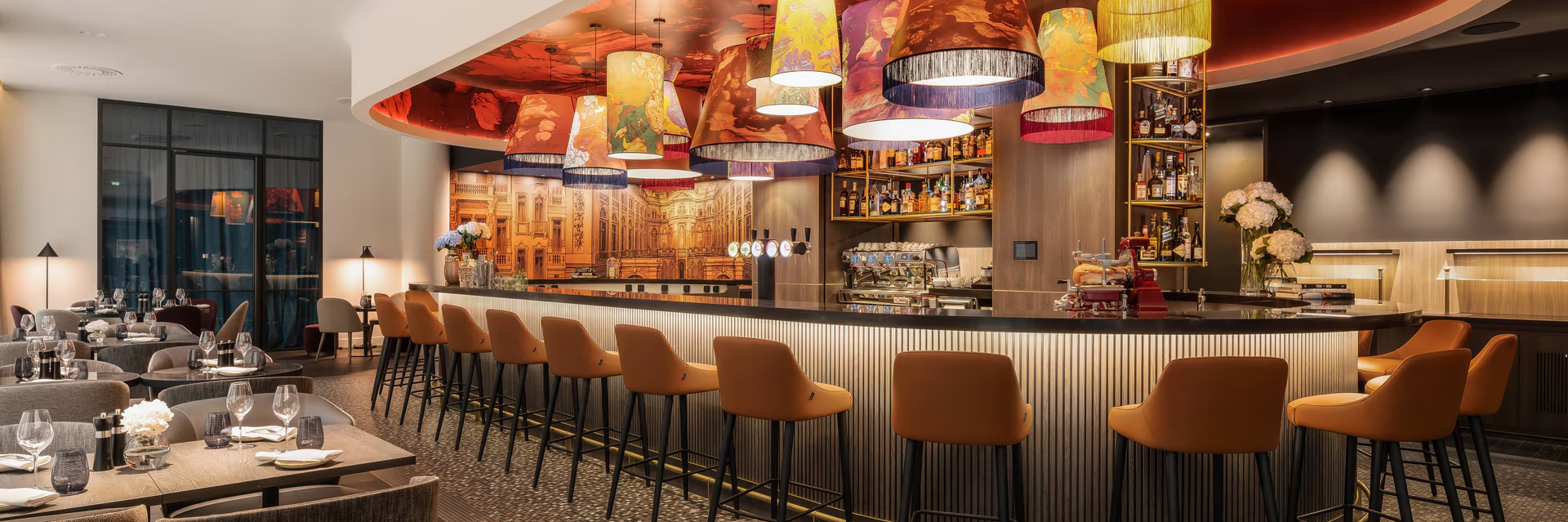
Renaissance Brussels Hotel (190€ per night) 19 rue du Parnasse Bruxelles, Belgique, 1050
Use this link to receive the preferential Antimony Day rate

In collaboration with… 

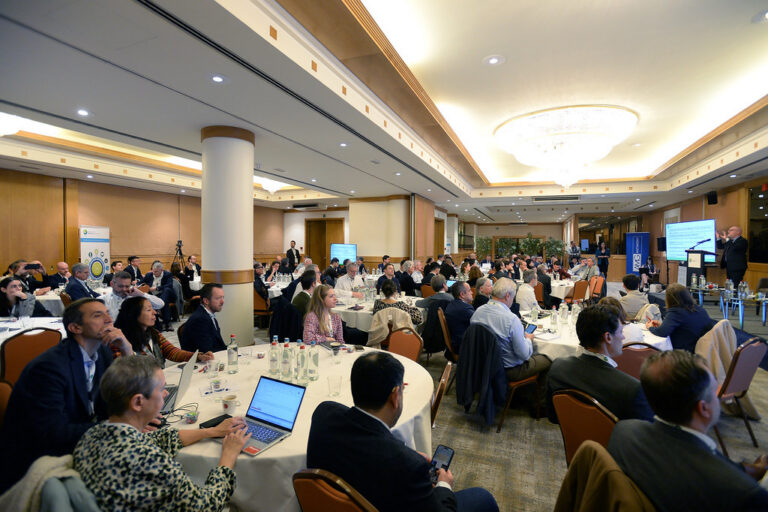
Images from last year’s event

ANTIMONY DAY 24-25 November 2026

Close Welcome Bar